
January 13, 2020
Teaching values and skills for careers of the future
By Jordan Pruis, LS Math Support and Enrichment Coordinator
HOW DO WE PREPARE STUDENTS TO SUCCEED IN CAREER FIELDS THAT DON’T EXIST YET – THAT WILL BE CREATED IN THE FUTURE?
There is a common assertion that a good portion of jobs that today’s learners will apply for have not been invented. Students will encounter an alarming number of job choices in the future of which today’s parents and teachers have not heard. So how do we prepare them if we do not know precisely the knowledge they will need for these careers? The simple answer: we develop values and transferrable skills.
On my first day as a robotics coach, I gave my teams a simple task: program the robot to move in a square. I showed them how to make both motors and wheels move (go straight) versus just one motor and wheel (turn). I had already shown them how to tell the robot to repeat steps in a program. I thought I had taught them everything they needed. They should figure this out in no time!
I put them into groups and set them to work. By the end of the hour session, one group had successfully completed the task, another needed to take a break from each other, and yet another had fully given up on the task. They had all the knowledge they needed. What were these other two groups missing? Again: the simple answer is values and transferrable skills.
From that day on, the focus shifted to developing skills for effective teamwork: communication, cooperation, and perseverance. Over time, I watched disjointed and frustrated groups develop into supportive and cooperative teams. Not only were they able to complete the square challenge but they began to explore aspects of programming beyond even my knowledge!
To this day, I am by no means an expert in robotics and programming. In fact, after a semester or two, many of the kids know more about how to build and program than I do. But what I realized taking on this role was that building the physical robot and program were not the ultimate goals of the robotics program. Sure, I was introducing them to the STEM world, something that is likely going to be a part of their future careers. More importantly they were developing cooperation, collaboration, critical thinking, problem solving, creativity, and innovation. Those values and skills will take them much further than any specific fact or procedure ever could.
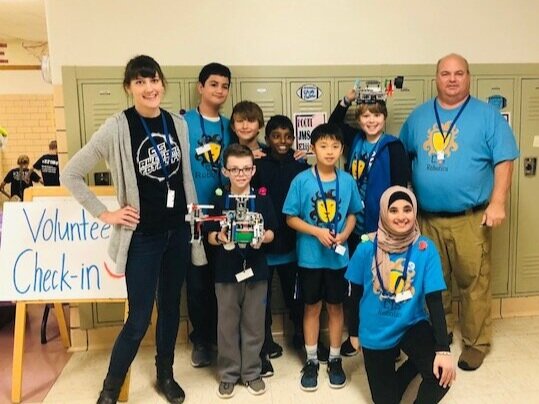
Today, CIS has an ever-growing robotics program. In its earliest days, a handful of students joined together to try their hand at programming a robot and compete against others. We were proud of their perseverance and resiliency while competing. Even when they only scored a handful of points while other teams climbed the leader board, they held their heads high, continued trying, and had some fun along the way.
Now our teams are filled with students from veteran programmers willing to mentor and encourage to eager new engineers ready to try something new. We have won a few awards along the way while making it further in the competition each year. We even hosted our own robotics competition! However, while robotics continues to grow at CIS, one thing remains the same: our students leave with the values and skills necessary for their future, even a future that has not yet been invented.