
October 20, 2020
Junior Kindergarten and Kindergarten students get hands-on problem solving experience in CIS STEM classes
By Ava Kitzi, alumni, class of 2022
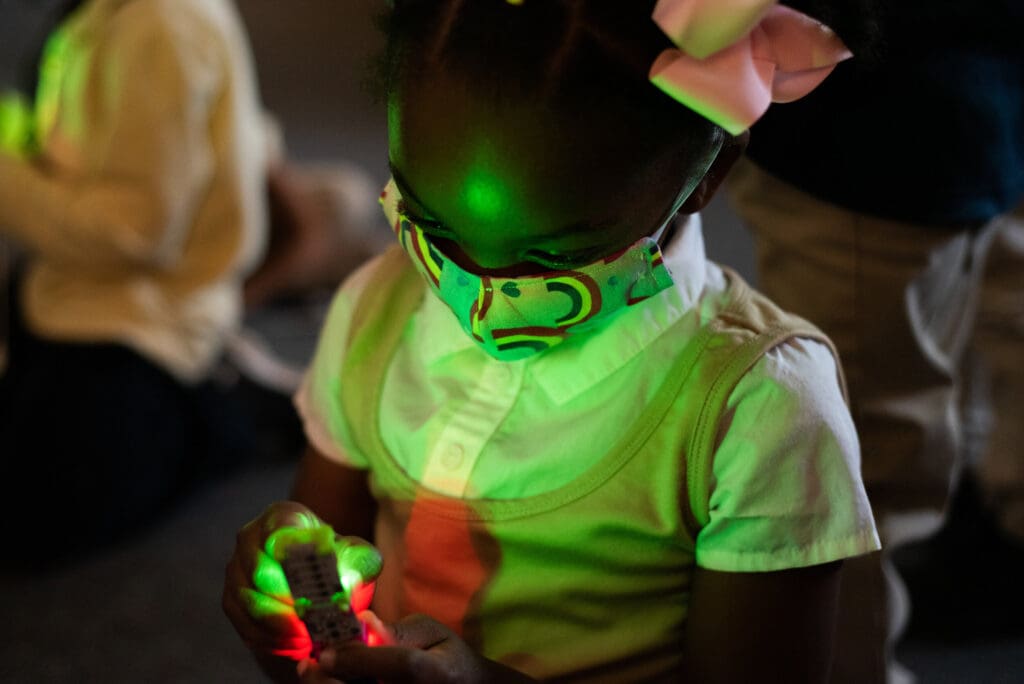
The United States Department of Education has touted STEM (Science, Technology, Engineering, and Math) as one of the leading ways to promote lifelong learning skills in students. Looking forward twenty years into the future, these disciplines will be at the forefront of innovation, leading the way to a more advanced society. Not missing a beat, CIS teachers have integrated a unique STEM program into Junior Kindergarten and Kindergarten classrooms, readying the next generation of engineers and mathematicians by installing perseverance, curiosity, and problem-solving skills in innovative, exciting experiences.
Physics and STEM teacher Wally Luther came to CIS looking for newness. So when opportunity struck to create a new program – now called the “Cube” – it seemed like fate. The Cube holds classes for grades JK-12, combining shop class with physics, math, and problem solving. Older grades work through self-designed projects for a real-life finished product. For the younger kids, however, Luther employs the basics of electricity and physics to get students excited about the class, all through Legos.
“We use building to solve problems, like “How can I make a zipline cart that’s strong enough to withstand a hit?”” Luther said, using a classic classroom activity as an example. “And they just go crazy with that, and they have a goal in mind that they use to solve it.”
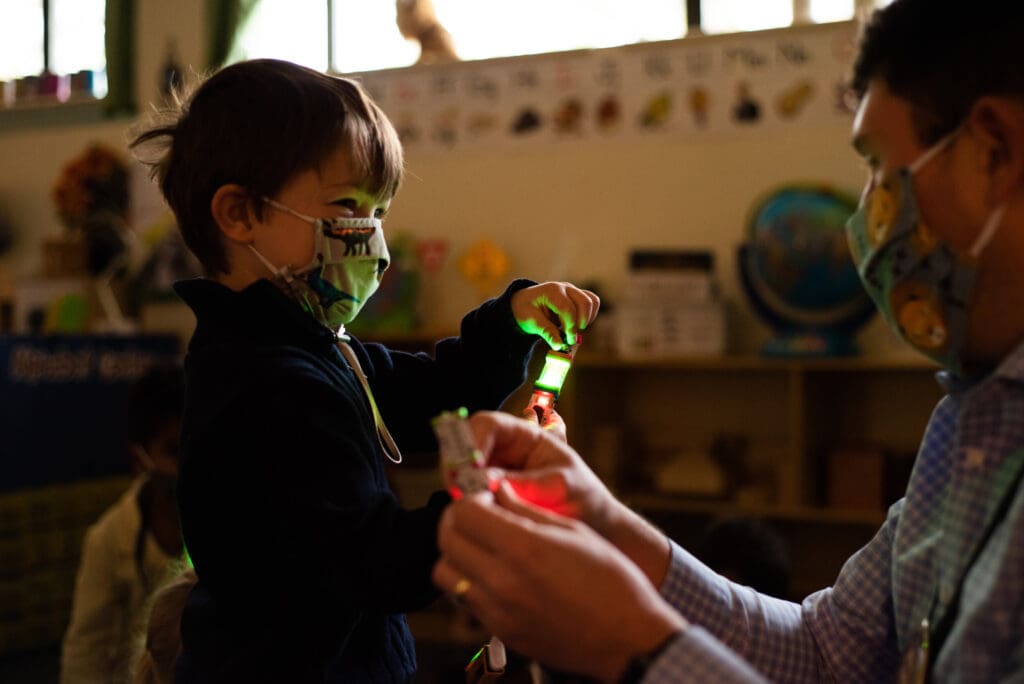
Among Luther’s other favorite class projects include using Little Bits to learn about electricity. By putting the pieces together to make a specific sound or bright color, kids learn the way energy flows, and are then able to apply it to the world around them. When given a specific goal, they’re entranced, and while some puzzles may take longer than others, that “aha!” moment is worth it.
And while electricity hums and Lego carts zip through ziplines across the room, CIS’ STEM curriculum goes beyond the Cube. According to Luther, the perseverance that has to preface those “aha!” moments, and the teamwork and communication that are built foundationally into the program is what’s leaving a lasting impact on students.
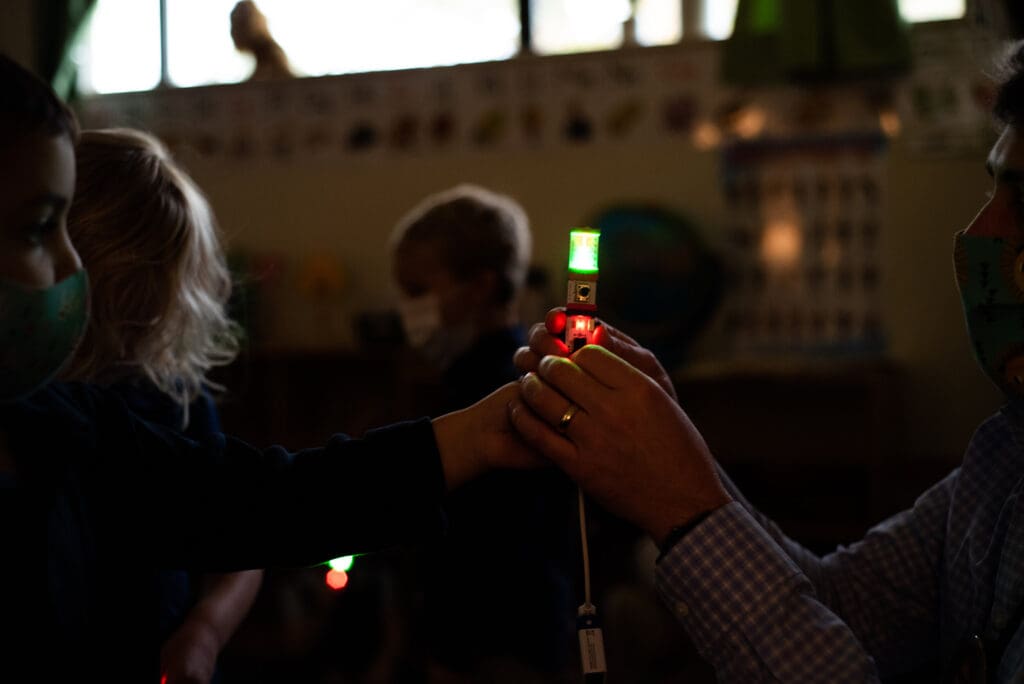
“Their ability to communicate their thought process, the ability to explain what they did, not really know what they’re saying, but just figure it out over time, and then being able to revise, they’re building a different language over time,” Luther explained regarding the scientific process students learn in STEM classes.
Junior Kindergarten teacher Jill Hancock can vouch for the transfer of life skills from Luther’s class into her own. Her favorite of the students’ STEM modules is a computer app that teaches kids directional awareness, following prompts from the computer to move left, right, up and down throughout the room. Students can then make a route, a functional plan for the problem at hand.
“There’s materials and experiences they can’t have in the classroom that they can in the STEM room,” Hancock explained. “It’s expanding their knowledge base, taking it to a whole new level.”
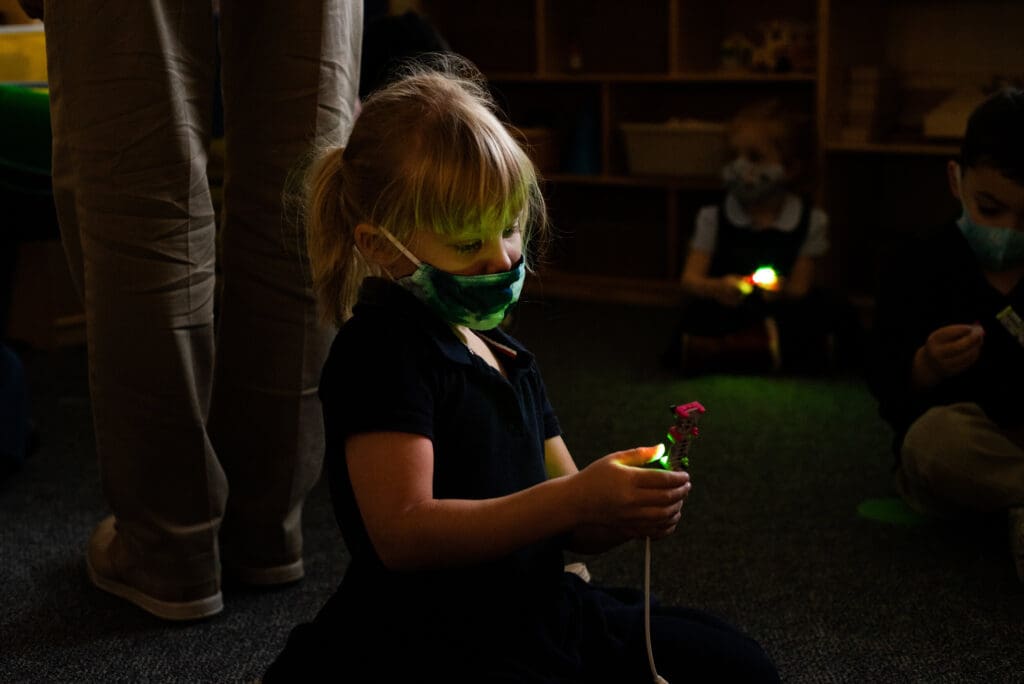
STEM classes are currently being taught at CIS by Luther and Rob Weir, Technology Coordinator and Instructor. Between the two, every grade has the opportunity for hands-on learning throughout the year, even with the pandemic. While some activities and projects have had to be halted or altered, the teachers are adapting. For example, some Lower School classes are having the fun brought straight to their room, thanks to iPad coding apps Kodable and Scratch Jr. According to Luther, the coding Pre-K and Kindergarten students are learning isn’t the typical JavaScript or Python, but simple cause-and-effect games that place the foundations in kids’ minds.
“They’re exploring, and later on they realize how much they really learned,” Luther explained fondly of his vision for what Lower School kids get out of STEM classes. “It wasn’t taught by words, but by doing.”